
Colorado Communities of Color Loan Fund: Capital With Comunidad at the Center
May 21, 2026
COLORADO— In Colorado, organizations serving communities of color are often asked to address some of the state’s biggest challenges: housing instability, displacement, economic mobility, and access to opportunity.
What they do not always have is access to capital.
A 2020 State of Colorado disparity study found that businesses owned by people of color continue to face significant barriers in lending, contracting, and economic opportunity, with many reporting higher rates of loan denials and difficulty accessing financing compared to white-owned businesses.
For community-rooted nonprofits and developers, those barriers can stall projects, delay services, or put entire neighborhoods at risk of being reshaped without the people who built them.
LCFC’s Colorado Communities of Color Loan Fund (CCCLF) was created to help change that.

Designed to provide flexible, culturally responsive financing to organizations led by and serving communities of color, the fund helps nonprofits and community developers move projects forward, preserve community assets, and invest in long-term stability.
For organizations like Adelante Community Development and The Fax Partnership, that support has already become a critical tool for protecting and strengthening the communities they serve.
Building Stability Through Flexible Support
For Adelante Community Development, the Colorado Communities of Color Loan Fund (CCCLF) provided support during a critical period when many community organizations were navigating growing needs with limited access to equitable funding.
“We are truly grateful for the support Adelante Community Development received through the Colorado Communities of Color Loan Fund,” says Maria Gonzalez, CEO of Adelante Community Development.
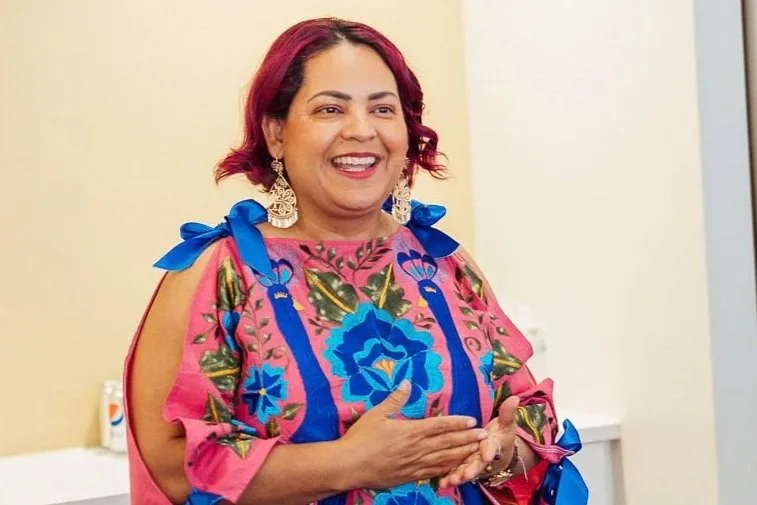
“Programs like this create real opportunity for organizations like ours to continue building capacity, expanding services, and responding to the urgent needs of our community during critical moments.”
-Maria Gonzalez
CEO Adelante Community Development
Gonzalez says the program stood out because it recognized the realities organizations serving communities of color often face when trying to secure traditional financing.
“We highly recommend the loan program and believe it has been an important tool to help culturally rooted organizations access flexible support that is often difficult to secure through traditional systems,” she says.
For Adelante, the impact extended beyond funding alone. “It creates trust, stability, and long-term community investment,” adds Maria. She also hopes the model continues to grow across the philanthropic and financial sectors.
“We sincerely wish more foundations and institutions would offer programs like this that understand the realities, challenges, and strengths of organizations led by and serving communities of color,” says Gonzalez. “Access to equitable capital and support is essential for building sustainable community impact and economic mobility.”
Preserving Community Along East Colfax
For The Fax Partnership, flexible financing became essential in a fast-moving effort to preserve affordability along one of Metro Denver’s most rapidly changing corridors.
The organization, which serves Denver and Aurora’s East Colfax community, works to address involuntary displacement through equitable development, housing stability, and business support.
After years of identifying properties that could help preserve affordability in the area, The Fax Partnership had an opportunity to acquire a motel property before it entered the speculative real estate market.
The organization assembled financing from multiple partners, including Enterprise Community Loan Fund, the Colorado Housing and Finance Authority, the State Department of Housing, and philanthropic partners. But a critical funding gap remained.
“The CCC Loan Fund was the perfect fit,” says Monica Martinez, Executive Director of The Fax Partnership. “They provided the necessary capital with flexible terms that were congruent with our other lenders’ requirements.”
Today, the site is operating as part of the City and County of Denver’s Roads to Recovery shelter program while long-term redevelopment plans continue moving forward. The flexibility of the fund helped the organization navigate a complicated capital stack that included multiple public and private funding sources.
“The LCF team looked at the project holistically,” says Martinez. That flexibility translated directly into operational support.
“Every dollar saved on interest and every hour saved on compliance is a resource we can redirect back into the properties and the Roads to Recovery shelter program”. She added that access to capital is one of the most important tools nonprofits have in preventing displacement before it happens.
“For a nonprofit developer, capital is the tool that allows us to move at the speed of the private market to prevent displacement before it happens,” Martinez shares.
Investing in Colorado’s Future
The organizations supported through the Colorado Communities of Color Loan Fund are doing more than launching projects or filling funding gaps. They are preserving affordable spaces, expanding culturally rooted services, and creating long-term stability in communities that have historically been underinvested.

For leaders like Gonzalez and Martinez, access to flexible capital is not simply about financing.
It is about ensuring communities of color have the resources, ownership, and decision-making power to shape Colorado’s future.
As housing pressures, displacement, and economic inequities continue to impact communities across the state, programs like the Colorado Communities of Color Loan Fund are helping ensure the organizations closest to the work are not left on the sidelines, but positioned to lead.